logo
Startseite

Blog Um Automatic Folder Gluer Operations Key to Precision Packaging Production

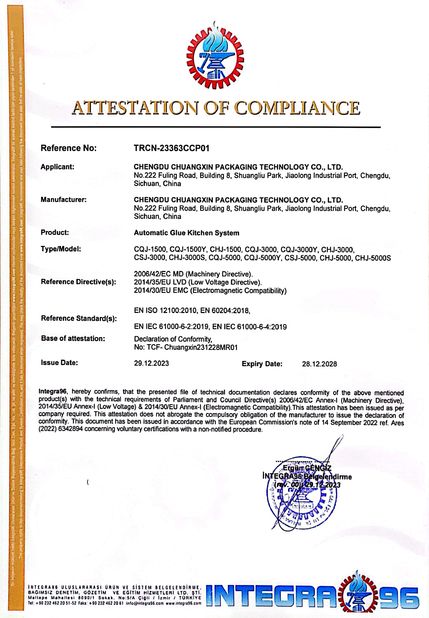
Bescheinigung
China Chengdu Chuangxin Packaging Technology Co., Ltd. zertifizierungen
Kunden-Berichte
Ein guter Ingenieur, keine Beschwerden. Respekt gegenüber den Betreibern. Er hat alle Fragen beantwortet.

—— Aserpel S.A. (Argentinien)

Wirklich sehr guter Service, Wissen, Haltung, Erfahrung Ihres verantwortlichen Ingenieurs Li.

—— M.PACK A.E. (Griechenland)

Ich bin online Chat Jetzt
Firma Blog
Automatic Folder Gluer Operations Key to Precision Packaging Production
Neueste Unternehmensnachrichten über Automatic Folder Gluer Operations Key to Precision Packaging Production

Automatic folder-gluers are the workhorses of modern packaging lines, converting flat die-cut carton blanks into finished boxes for food, pharmaceutical and cosmetics products. Each machine combines feeding, gluing, folding and compression into one continuous production run. For line operators, understanding how the equipment functions — and how to run it without injury — is a baseline requirement.

How the machine turns flat blanks into boxes

A folder-gluer performs a single, tightly sequenced task: it takes pre-die-cut cardboard blanks and transforms them into three-dimensional cartons. The process breaks down into four mechanical stages.

  • Blanks feeding: Flat carton blanks are fed into the machine in precise alignment.
  • Gluing: Adhesive is applied in controlled amounts at designated glue points.
  • Folding: Guide rails and folding units drive the panels into their final position.
  • Compression bonding: Pressure belts press the glued seams together so the bond sets firmly.

Each stage depends on the one before it. Misalignment at the feeder or a light glue application will surface later as a defective carton, which is why setup accuracy carries as much weight as running speed.

Safety rules come before production speed

No automated machine should run without safeguards in place. Operators are expected to observe a fixed set of rules whenever the folder-gluer is powered.

  • Operator qualification: Only trained personnel may enter the work area.
  • Dress code: No jewelry, long hair tied back and no loose clothing, all to prevent entanglement in drive components.
  • Guard checks: Confirm every safety guard is mounted and test the emergency stop button before production begins.
  • Lockout discipline: Never reach inside the machine while it is running; all cleaning and adjustment work must follow a power-down.

These measures are not optional formalities. Rotating rollers, pressure belts and folding rails operate at speeds that leave no margin for a lapse in attention.

The pre-production setup checklist

Consistent output starts with accurate adjustment. The following checks should be completed before the first blank enters the machine.

Check item Key actions
Environment Place the machine on a level, stable surface in a dry area free of excessive dust.
Mechanical inspection Verify that belts, folding rails, the glue tank and sensors are clean and securely fastened.
System initialization Switch on main power and confirm the control panel shows no error codes.
Feed alignment Ensure blanks are properly aligned; this is the decisive step in preventing jams.

Operators should also start the run at low speed. Watching how blanks behave through folding and gluing at reduced velocity confirms that glue position and fold angles are correct before output rates are raised.

Diagnosing common faults on the line

Even a well-prepared line can encounter problems mid-run. Four faults account for most interruptions, and each has a standard remedy.

  • Inaccurate forming: Usually traced to a displaced folding rail or off-square feeding; recalibrate the rails.
  • Weak bonding: Check glue volume and the cleanliness of the glue roller, then adjust application settings if needed.
  • Frequent jams: Most often caused by uneven feeding or damaged blanks; inspect the feed system.
  • Distorted cartons: Adjust the tension and alignment of the pressure belts.

Because these symptoms tend to compound, correcting the root cause early in the run is more efficient than clearing repeated stoppages downstream.

Frequently Asked Questions
How can an operator tell when a folder-gluer needs deeper maintenance?
Beyond routine cleaning of the glue tank and rollers, signs include abnormal vibration during operation, noticeably uneven belt tension, delayed sensor response and a steady decline in folding accuracy. Any of these indicates that components need closer inspection and lubrication, and periodic checks should follow the manufacturer's recommended intervals.
Why should production start at low speed?
Running slowly allows the operator to observe how blanks behave during folding and gluing and to confirm that parameters such as glue position and fold angle are correct under stable conditions. Speed is increased gradually once these are verified, which reduces waste and limits wear on mechanical parts.
Which settings must be recalibrated after switching to a different board material?
Changing board material or thickness requires readjusting the spacing of the folding rails, the pressure applied by the pressure belts and the glue volume delivered by the application system. Because stiffness and glue absorption vary widely between materials, reusing the previous settings produces unstable forming quality.
Kneipen-Zeit : 2026-11-04 00:00:00 >> Blog list
Kontaktdaten
Chengdu Chuangxin Packaging Technology Co., Ltd.

Ansprechpartner: Mrs. Dolly Pan

Telefon: 86-13880447301

Senden Sie Ihre Anfrage direkt an uns (0 / 3000)