logo
Αρχική Σελίδα

ιστολόγιο Περίπου Modular Automation and Digital Integration Optimize Corrugated Box Production

Πιστοποίηση
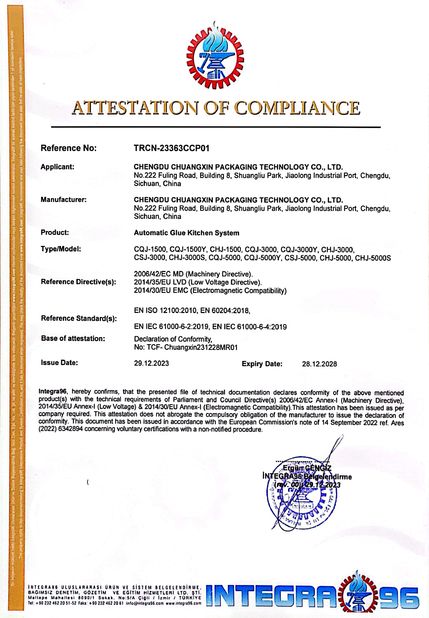
Κίνα Chengdu Chuangxin Packaging Technology Co., Ltd. Πιστοποιήσεις
Αναθεωρήσεις πελατών
Καλός μηχανικός, χωρίς παράπονα. Σεβασμός στους χειριστές. Απάντησε σε όλες τις ερωτήσεις.

—— Aserpel S.A. (Αργεντινή)

Πραγματικά πολύ καλή εξυπηρέτηση, γνώση, στάση, εμπειρία του υπεύθυνου μηχανικού σας Li.

—— M.PACK A.E. (Ελλάδα)

Είμαι Online Chat Now
επιχείρηση ιστολόγιο
Modular Automation and Digital Integration Optimize Corrugated Box Production
τα τελευταία νέα της εταιρείας για Modular Automation and Digital Integration Optimize Corrugated Box Production

Modern corrugated box production lines have moved from separate mechanical units to integrated, modular systems with digital controls. For manufacturers, the main challenge is balancing capacity, floor space and production flexibility across a process that runs from board feeding to finished pallet stacking.

Core architecture of an automated line

A complete automated corrugated box line is not a simple collection of machines; it is a system engineered around a specific production process. Modular design allows raw material intake, printing, forming and palletizing to be linked with minimal manual intervention.

Typical functional stages include:

  • Automatic feeding: Hydraulic scissor lifts and roller conveyors support precise, high-volume board loading.
  • Printing and processing: Flexographic modules can handle single- or two-color printing for customized packaging requirements.
  • Forming and converting: Slotting, creasing, die-cutting and box folding are carried out in a core forming unit.
  • Downstream handling: Automatic gluing, folding, stacking and palletizing systems help ensure consistent output.
Module Primary function Technical feature
Board feeder Automatic feeding Precise pickup and stable conveyor transfer
Flexographic printer Printing Single- or two-color flexographic printing
Box forming unit Core forming Multi-function box making and folding
Job queue system Logic control Integrated MRP/MES/ERP data interfaces

Digital integration and output optimization

The competitive advantage of a modern corrugated line lies in its digital integration. Through a job queue system, a line can exchange data directly with existing MRP, MES, ERP or MOM software, reducing manual input and supporting real-time scheduling and task optimization.

Modular components also allow the line to be configured around expected output, packaging type and plant footprint. That approach lets manufacturers start at an appropriate scale and add modules as business grows, keeping fixed-asset investment under control while improving overall production efficiency.

Space planning and scalable configuration

Layout decisions are central to whether an automated line fits an existing plant. Because feeding, printing, forming and stacking are separate modules, planners can evaluate material flow and equipment footprints and adjust the configuration to improve space utilization.

Scalability depends on early planning as well. Control architecture and reserved physical space determine how readily a line can accept additional modules later, so output-growth targets should be defined during equipment selection.

Frequently Asked Questions

How can a manufacturer determine whether an automated line suits an existing factory space?
The line layout should be assessed on a modular basis. Because the system consists of independent modules for feeding, printing, forming and stacking, planning must account for material flow and equipment footprints. A detailed floor plan should be provided early so the technical team can simulate the layout and optimize space utilization.
What prerequisites are needed to integrate a line with ERP/MES systems?
Integration requires a job queue management system with open interfaces, such as JQS. The existing ERP or MES must support standard data-exchange protocols so instructions can connect to the line control system. The technical team must then adapt and commission the protocols.
What limits should be considered when upgrading modular equipment later?
Upgrades are mainly constrained by the line's logic-control architecture and available physical space. At the initial purchase stage, sufficient expansion space should be reserved, and the control system should have redundancy to accommodate additional modules. Future output targets should be defined during selection so interfaces can be planned in advance.
Χρόνος μπαρ : 2026-10-26 00:00:00 >> blog list
Στοιχεία επικοινωνίας
Chengdu Chuangxin Packaging Technology Co., Ltd.

Υπεύθυνος Επικοινωνίας: Mrs. Dolly Pan

Τηλ.:: 86-13880447301

Στείλετε το ερώτημά σας απευθείας σε εμάς (0 / 3000)