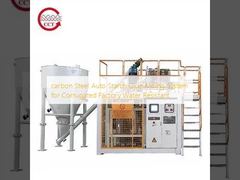
Máquina de tratamento de águas residuais de tinta

Outros vídeos
October 20, 2023
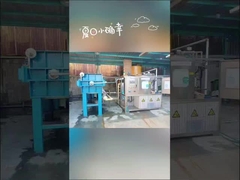
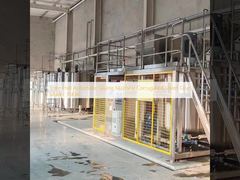
Brief: Discover the 2000L/Day Water Based Ink Printing Wastewater Treatment Machine, a cutting-edge filtration system designed to clarify printing wastewaters by removing suspended solids and ink. This machine uses enhanced flocculation, internal electrolysis, and advanced chemical oxidation to ensure wastewater meets reuse standards for glue making and washing water.
Related Product Features:
  • Clarifies printing wastewater by removing suspended solids and ink through advanced filtration.
  • Utilizes enhanced flocculation, internal electrolysis, and chemical oxidation for effective treatment.
  • Adjusts PH value and removes most anions in wastewater simultaneously.
  • Processes up to 2000L of wastewater daily, making it ideal for industrial use.
  • Produces colorless water suitable for reuse in starch glue production and washing equipment.
  • Designed to meet strict effluent water quality standards with CODCr ≤100 mg/L and chromaticity ≤50.
  • Achieves 'Zero Discharge' by enabling wastewater reuse in various production processes.
  • Customizable to handle influent water quality with CODCr levels up to 12000 mg/L.
Perguntas frequentes:
  • What types of wastewater can the 2000L/Day Water Based Ink Printing Wastewater Treatment Machine process?
    This machine is specifically designed for water-based ink printing wastewater, with influent CODCr levels ranging from 6000-12000 mg/L and chromaticity up to 1000.
  • How does the machine ensure the treated water meets reuse standards?
    The machine employs enhanced flocculation, internal electrolysis, and advanced chemical oxidation decolorization, along with PH regulation, to ensure the effluent meets reuse standards for glue making and washing water.
  • What are the key benefits of using this wastewater treatment machine?
    Key benefits include efficient removal of suspended solids and ink, PH adjustment, anion removal, and the ability to reuse treated water for various industrial processes, achieving 'Zero Discharge' goals.